NVIDIA continues to strengthen its position as a technology leader in artificial intelligence, AI infrastructure, and computing accelerators. In recent weeks and months, it has introduced a number of strategic products, expanded partnerships, and continued to develop large-scale AI platforms for industry, scientific research, and the consumer market.
1. New generation of AI architecture – the Rubin platform
NVIDIA has officially launched the Rubin platform, a key evolution of its AI infrastructure, which includes six new chips designed for scalable supercomputing applications and AI computing tasks. According to the company, Rubin is set to establish a new standard in the construction and deployment of large-scale AI systems with efficiency and security features designed to support both training and inference of models with massive computational demands.
This platform is considered a major milestone in network AI architecture and is the result of years of integration of chips optimized for fast parallel computing. Rubin is designed to support the mainstream deployment of artificial intelligence in both the enterprise and public sectors.
2. Expanding partnerships and building AI factories
NVIDIA has expanded its strategic partnership with CoreWeave to accelerate the construction of more than 5 GW of AI factories by 2030, a key initiative for global AI infrastructure scaling. This partnership will enable faster installation and operation of large-scale computing clusters based on NVIDIA GPU accelerators.
Vedle toho společnost spolupracuje se Siemens na budování průmyslového AI operačního systému, který integruje AI akceleraci napříč výrobními řetězci, simulacemi a konstrukčními procesy.
3. Robotika a fyzická AI
NVIDIA rovněž uvedla nové fyzické AI modely a frameworky pro vývoj robotiky, zahrnující open-source modely Cosmos a GR00T a cloud-edge framework OSMO, které zjednodušují trénink a evaluaci autonomních robotických systémů. Výsledkem je hlubší integrace AI do průmyslové automatizace i kolaborativních robotických aplikací.
4. Financial results and market dynamics
According to the latest official results, NVIDIA achieved record revenues of $57 billion in the third fiscal quarter of 2026, a year-on-year increase of 62%, with data centers generating record revenues of over $51 billion.
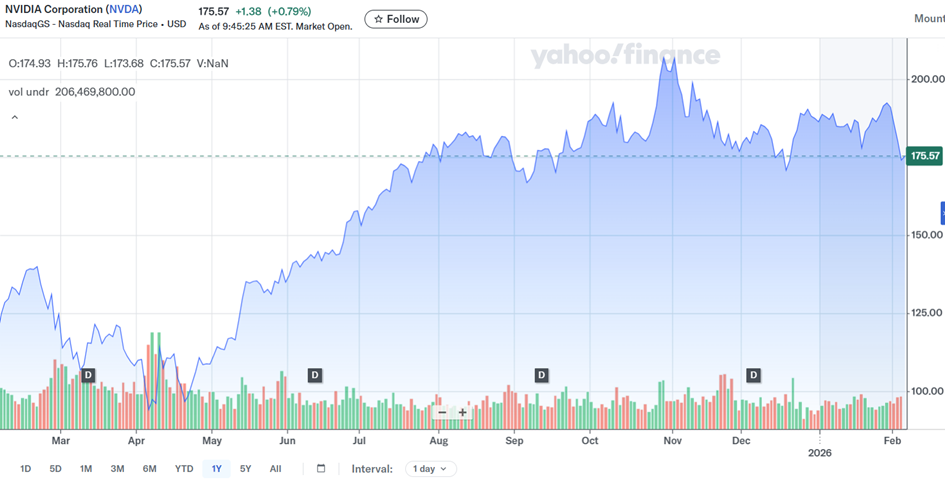
Despite record earnings, the company’s shares are trading under pressure from the broader semiconductor market, with analysts pointing out that a growth catalyst—such as earnings results or new product launches—could restore investor confidence and trigger a new phase of growth.
5. Investment position and relationship with OpenAI
Recent reports suggest that NVIDIA is in advanced talks to invest up to $20 billion in OpenAI, which would be one of the largest single investments in the history of the AI sector. The deal has not yet been officially confirmed, but it would potentially strengthen ties between a key AI hardware manufacturer and a leading developer of AI models.
Conclusion
In the first months of 2026, NVIDIA is focusing on consolidating its technological dominance in AI, expanding strategic partnerships, introducing new platforms and models for AI infrastructure, and innovating traditional products such as DLSS and G-SYNC. The result is a robust portfolio of technologies that is impacting industry, science, and the consumer market for artificial intelligence.
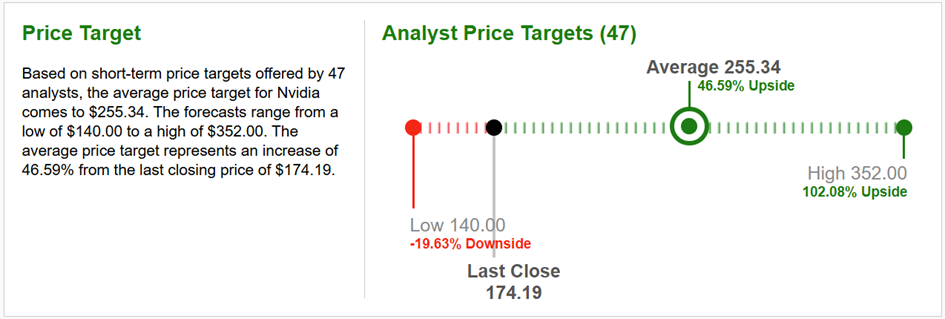
NVIDIA Corporation (NASDAQ:NVDA) also pays regular quarterly dividends. The current dividend yield is 0.02% p.a. The dividend amount itself was approved by the company’s general meeting at USD 0.01 per share. The average target price for the short to medium-term investment horizon was set by 47 analysts from Zacks.com at USD 255.34 per share.